Join the Zero Suicide Movement

Because One Loss is Too Many

Take the Pledge

If you or someone you care about is in crisis and needs immediate help dial the Suicide & Crisis Lifeline at 988 or call 911 for emergency response.

About Zero Suicide Communities

Zero Suicide is an aspirational, but essential goal. This movement was initially launched by the U.S. National Strategy for Suicide Prevention in 2012 with the intention of enhancing suicide care in healthcare systems across the country. It’s made a marked positive impact, but with one life lost to suicide every 11 minutes in the U.S., we need to enlist others to help. Family, friends, colleagues, bosses, teachers and coaches – we all can help prevent suicide. Now is the time to step up and speak out. We must educate ourselves about suicide and what we can do to help. It’s a shared responsibility and why we must work to become a suicide-safer city. You can make a difference – take the pledge today.

Take the Pledge
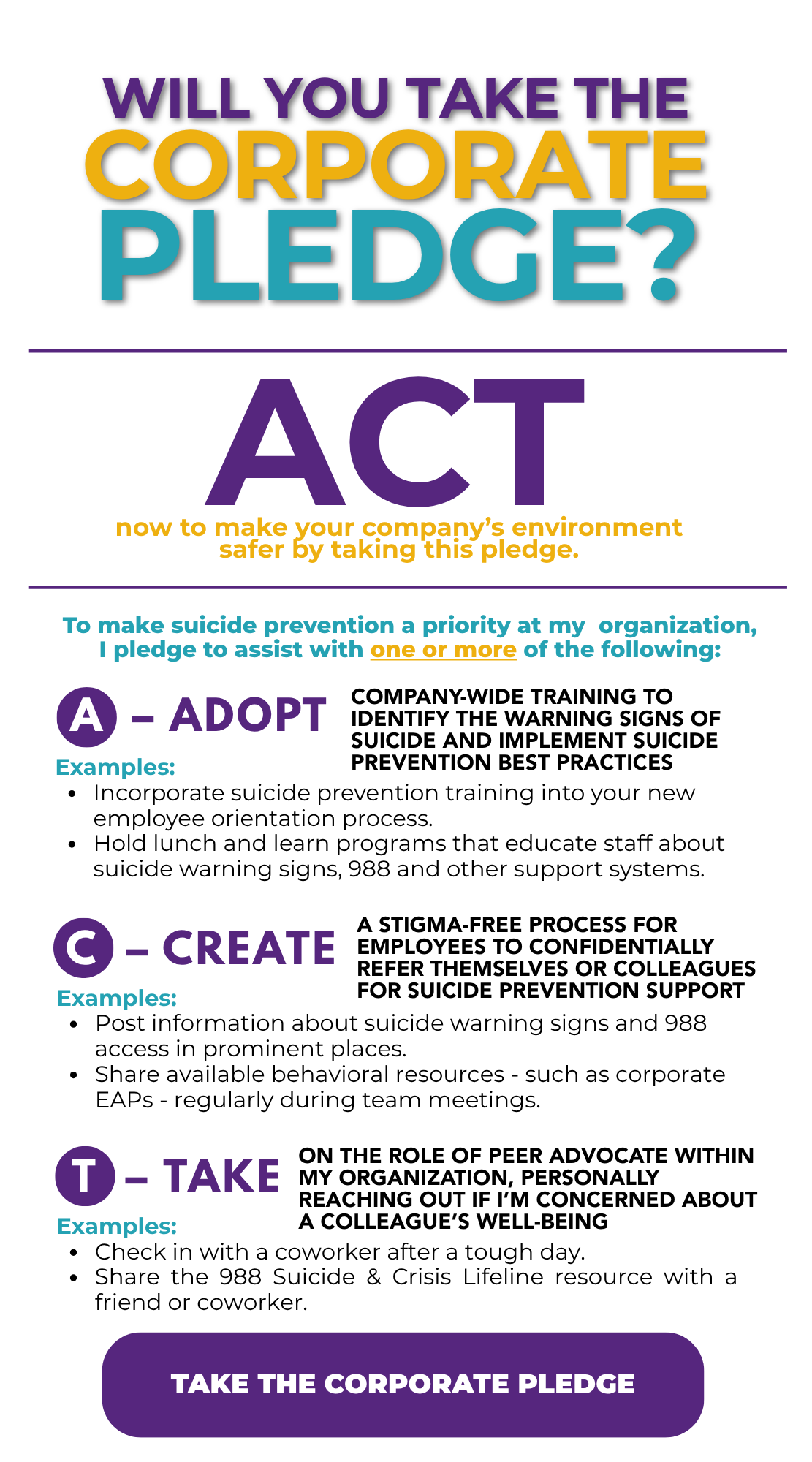
Image link
Image link

What to Do

If you suspect someone is considering suicide, it is important to take immediate action. Please familiarize yourself with these communication techniques and proven best practices for intervention. For more in-depth information, including sample scripts of what to say, download our fact sheet.

Download Fact Sheet
Image link

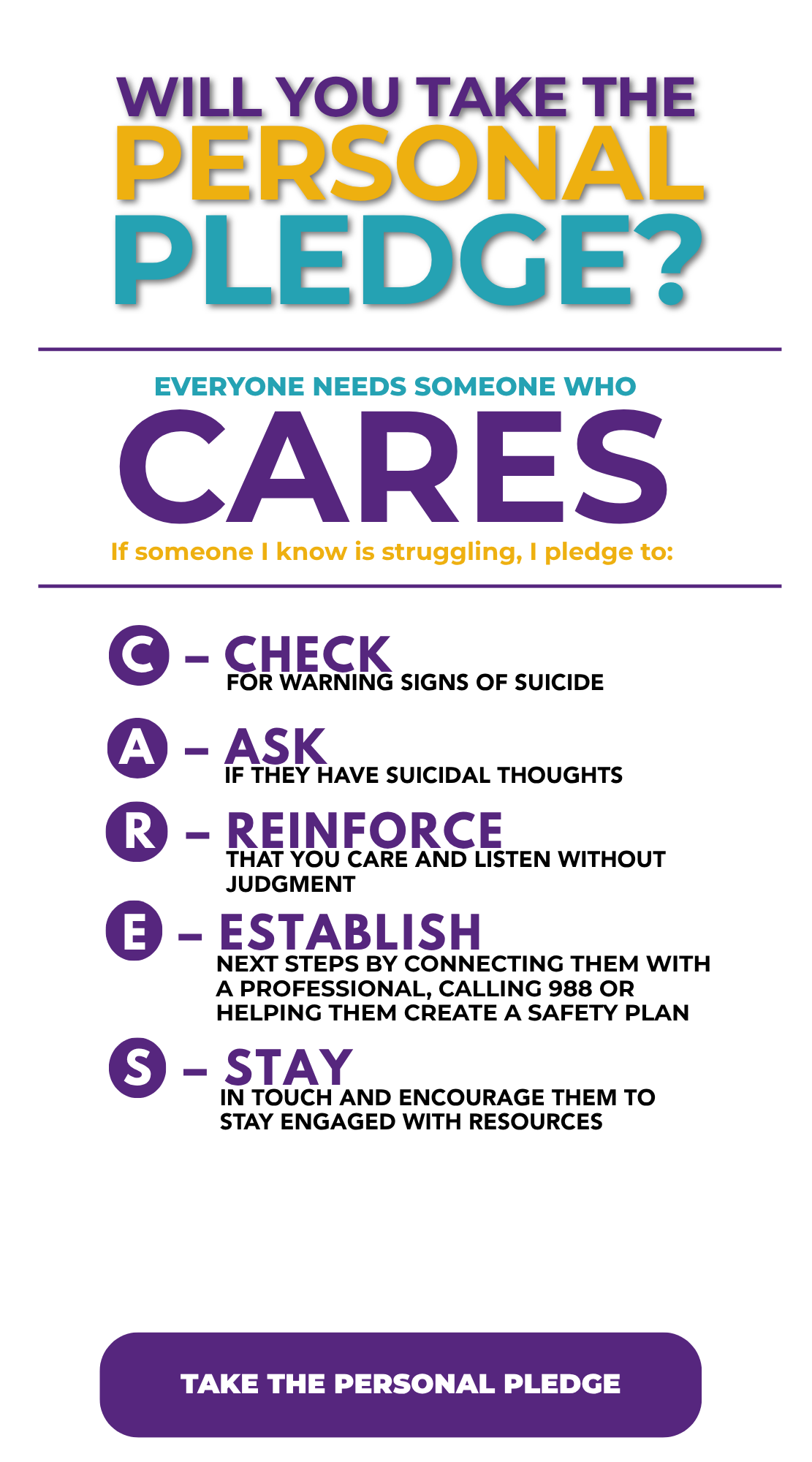
If someone exhibits suicide warning signs, remain calm and gently but directly ask them if they are considering suicide. Contrary to what many people think, this will not put the idea in their head or lead them to take their own life. It often comes as a relief, opening a door that allows them to share their pain. If possible, ask follow-up questions about whether they have a plan, how they were considering doing it and if they’ve tried to end their life before. This not only provides them with the opportunity to talk through their feelings, but it also supplies you with valuable information that may help you offer better support.


Although it’s tempting to try to change their outlook, your job is to keep them safe and listen without judgement. That means not pointing out all the good things in their lives, applying guilt about how upset their family would be, telling them that other people have it worse, or implying they don’t mean what they are saying. Simply let them know you care and practice active listening. Learn more about what to say when they do want feedback here.


If the person you are helping has items that could be used to end their life – such as pills or a gun – and you can safely remove them, do so. Multiple studies have shown that eliminating access to lethal means is a very powerful way of reducing suicide. This is because the time span between considering suicide and attempting it is often short. If they have a gun, or something else that puts you both in imminent danger, call 911 immediately.


If you have any reason to believe the person you are helping is in imminent danger of harming themselves, it’s critical to get them professional help quickly. If they have a firearm, have already taken medication, or it is a life-threating situation, 911 is the best way to proceed. Otherwise, call the Suicide & Crisis Line at 988 as they are specifically trained to assist the person who is struggling and the person trying to help.  


Do not leave the person you’re helping alone. And do not agree to keep it a secret. If they were experiencing something extreme with their physical health – like a heart attack – you wouldn’t leave them or not tell their family, the same holds true here. Share the responsibility of providing support by helping them build a safety net of personal and professional resources. 

Once the person you care about is past the initial danger, it’s critical to stay engaged. One way to do this is by helping them create a safety plan and then follow up with them to ensure the strategies are working for them. A safety plan is a resource they use when they are feeling vulnerable. It contains helpful information including warning signs that indicate they are starting to have suicidal thoughts, coping strategies and distractions they can implement, trusted people they can contact when in need, and ways they can make their environment safer in the moment. Just being there for them and checking in matters as suicide risk can remain high until a crisis passes. Also, research has repeatedly shown that increasing connectedness can reduce suicidal thoughts.


Testimonials

“When things feel too heavy, just know you are not alone. There are people who care, including me, ready to help you find the support and resources you deserve.”​

Tenikka Hughes, Anchor​
CBS47/FOX30 Action News Jax​

Businesses That Have Taken the Pledge

Incorporate Best Practices at Your Workplace

The average employed American spends more time working than doing anything other than sleeping. And data from the U.S. Department of Health and Human services showed that 76% of U.S. workers report experiencing at least one symptom of a mental health condition each year. The workplace is a key space to make changes that can help improve mental health and prevent suicide. It’s not only a human thing to do, but it also improves the bottom line. Employees who are supported in their mental well-being perform at higher rates of productivity, have reduced absenteeism and cost their employees less in general health care. In fact, according to National Safety Council for every $1 employers invest in mental health treatment, there is a $4 return in improved health and productivity. Please take this opportunity to learn more.

Download Fact Sheet
Image link

The first step is to assess your company’s capacity to address employees’ mental health. Look beyond your employee manual to examine company culture and analyze the types of mental health training you provide. Explore tools such as employee assistance programs (EAPs). Free and paid scorecards are available to help assess where your company stands and provide ideas about how to level up.


Creating positive change necessitates proactively working through any concerns corporations may have. The Workplace Suicide Prevention & Postvention Committee, outlines common corporate questions about liability, training and accommodations and provides answers, case studies and ideas for implementing different mental health initiatives.


When it comes to mental health education, the key is committing to implement consistent wellness practices. Organizations with no formal mental health training can start by inviting mental health nonprofits in to speak or by using free or low-cost online courses. If you already have training in place for management, consider expanding it company-wide.


Integrating mental health into your company culture improves employee well-being and supports increased productivity and reduced absenteeism. Start by including mental health articles in newsletters, posting suicide warning signs and 988 information in common areas, and holding lunch-and-learn events. Promote resources like health insurance plans, EAP programs and sick leave policies that include mental health days. Ensure employees know they can discuss mental health with HR without worrying about confidentiality or job jeopardy. Develop a process for sharing concerns about struggling colleagues.


With more than 47 million people in the U.S. living with a mental health condition, many employees have lived experience. Some may be open to serving as peer advocates once educated about suicide. Consider starting an employee resource group (ERG) to champion mental health. The American Psychiatric Association’s Center for Workplace Mental Health offers a free Mental Health Guide with a variety of ideas.

Once the person you care about is past the initial danger, it’s critical to stay engaged. One way to do this is by helping them create a safety plan and then follow up with them to ensure the strategies are working for them. A safety plan is a resource they use when they are feeling vulnerable. It contains helpful information including warning signs that indicate they are starting to have suicidal thoughts, coping strategies and distractions they can implement, trusted people they can contact when in need, and ways they can make their environment safer in the moment. Just being there for them and checking in matters as suicide risk can remain high until a crisis passes. Also, research has repeatedly shown that increasing connectedness can reduce suicidal thoughts.


“I hate to think about the fact that someone could be really hurting and just too embarrassed or afraid to reach out. I am now aware of the warning sides and how I could help and will be at the ready if someone needs me.”​

Renay
St Johns​

“It’s heartbreaking to know people suffer in silence because they don’t know where to turn. I feel more equipped now to recognize when something’s off and be a source of support instead of just hoping someone else will step in.”​

Gretchen, Jax Beach​
Simply amazing!

“I never realized how much impact a small gesture or question could have. This opened my eyes to what to look for—and gave me the courage to speak up if I see someone struggling.”​

Cody, Fruit Cove​
Simply amazing!

“There’s no wrong way to do the right thing, and my personal pledge to CARE for others is simply the right thing to do.”​

Jonathan, Mandarin​
Simply amazing!

"Even one life saved makes it all worth it."​

Jodi, Neptune Beach​
Simply amazing!

"Suicide touches us all; I know so many people who have contemplated suicide at different points in life and it is important to remind everyone in our circles that they are not only, and that their contribution to Life matters."​

Kristine
Co-Host of Jacksonville’s Morning News on 104.5 WOKV-FM.​

"This month holds a deep and painful meaning for our family. Just two days after his 17th birthday our beloved nephew Aidan took his own life. He was bright, kind, funny and so deeply loved. None of us saw this coming and we miss him every day. We are sharing not for sympathy, but to speak loudly and clearly: You are not alone. There is Help! There is Hope!"​

Robert, St. Augustine ​
Simply amazing!